
Key Considerations for Picking Your Pole Barn Door
Before diving into door styles, consider how your building will be used and how often you’ll access it. These four questions will help guide your decision:
1. How often will you be using the doors?
Is the door on an Agricultural building with equipment going in and out daily, or is it on a Machine Shed that you use once a week? The frequency of use helps determine how much convenience and ease you need.
2. What size of vehicle or equipment will be going through the doorway?
The benefits of certain door styles depend on the size of the opening. Knowing the dimensions of your equipment and doorway requirements will help you choose the right door.
3. What’s your building layout?
Consider your complete building layout, including ceiling height. Deciding on the type of door early allows your builder to design the structure around it, avoiding costly changes later.
4. What do you want your building to look like?
The door you choose affects both function and appearance. Some door styles offer far more customization than others, allowing you to match the finished look of your building.
Once you’ve outlined your needs, it’s time to compare the three most common types of pole barn doors:
- Sliding
- Overhead
- Hydraulic
The Budget Saver: Sliding Doors for Pole Barns
Sliding doors are a cost-effective solution for large openings, especially when simplicity and durability matter most.
Pole barn sliding doors are the best way to get more door for less money. They offer wider openings than other door styles while maximizing the full clearance height of your building.
For reference, Greiner Buildings has installed sliding doors up to 40 feet wide and 20 feet tall.
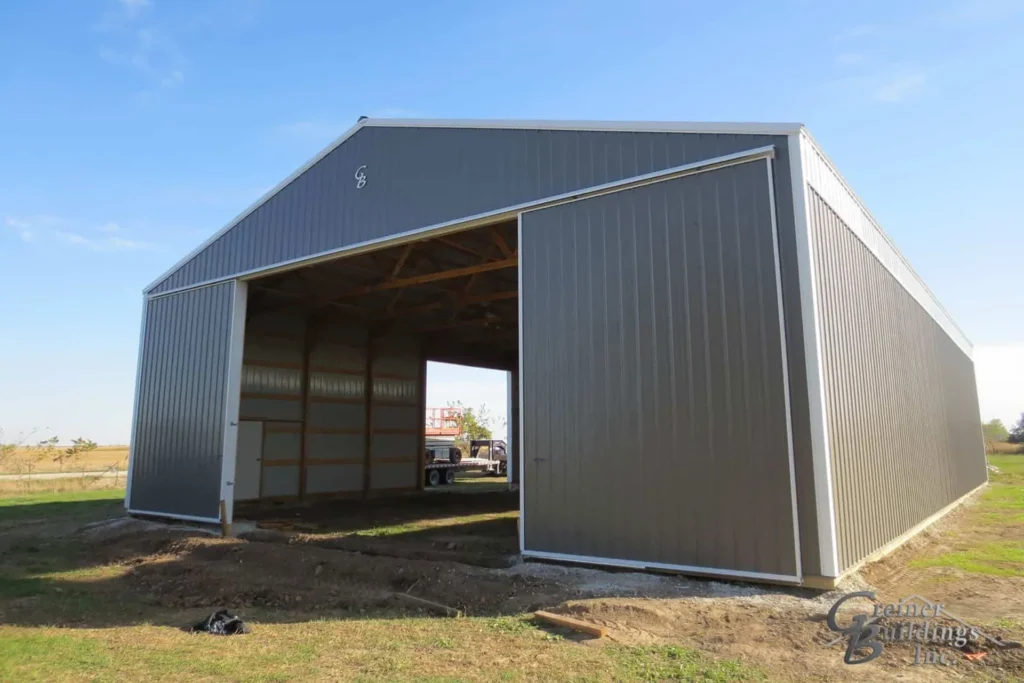
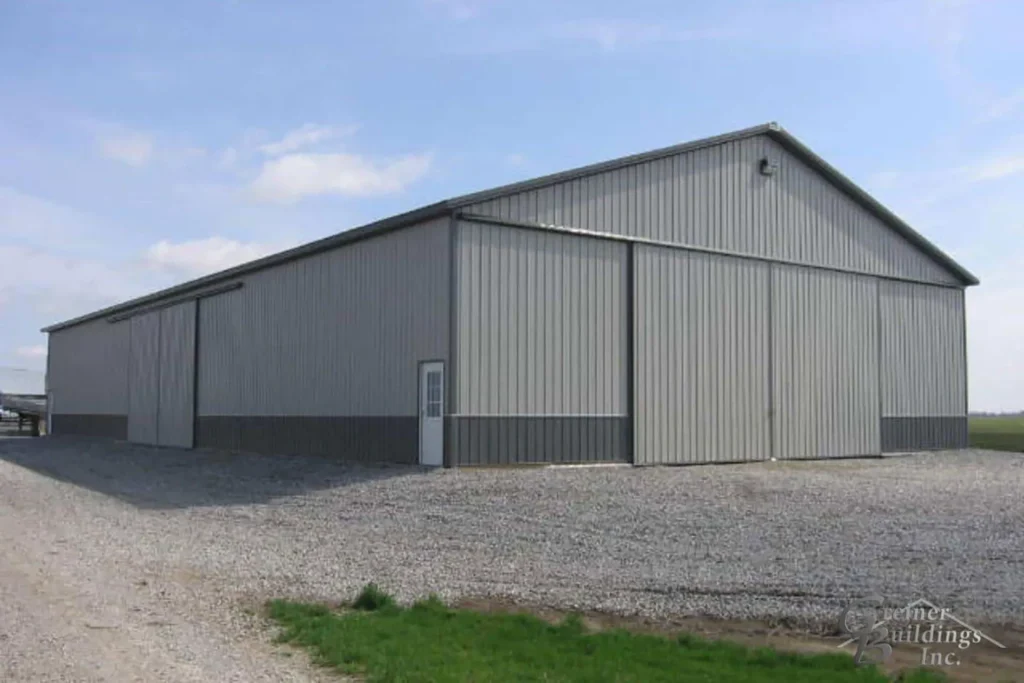
Sliding doors let you use the full opening height, making them ideal for Agricultural Storage and Equipment Buildings where maximum clearance is important.
However, while they excel in utility, they don’t offer the same level of convenience or weather sealing as other door styles.
Advantages
- Affordable and ideal for large openings.
- Maximize available clearance height.
- Simple design that’s easy to maintain for farm operations.
Considerations
- Manual operation is less convenient for buildings used every day.
- Do not seal as tightly, allowing more drafts, dust, and debris.
- Require wall space beside the opening, limiting window and door placement.
When affordability and wide openings are the priority, sliding doors are an excellent choice for Livestock Barns, Equestrian Buildings, and Machine Sheds.
The Reliable Favorite: Overhead Doors for Pole Barns
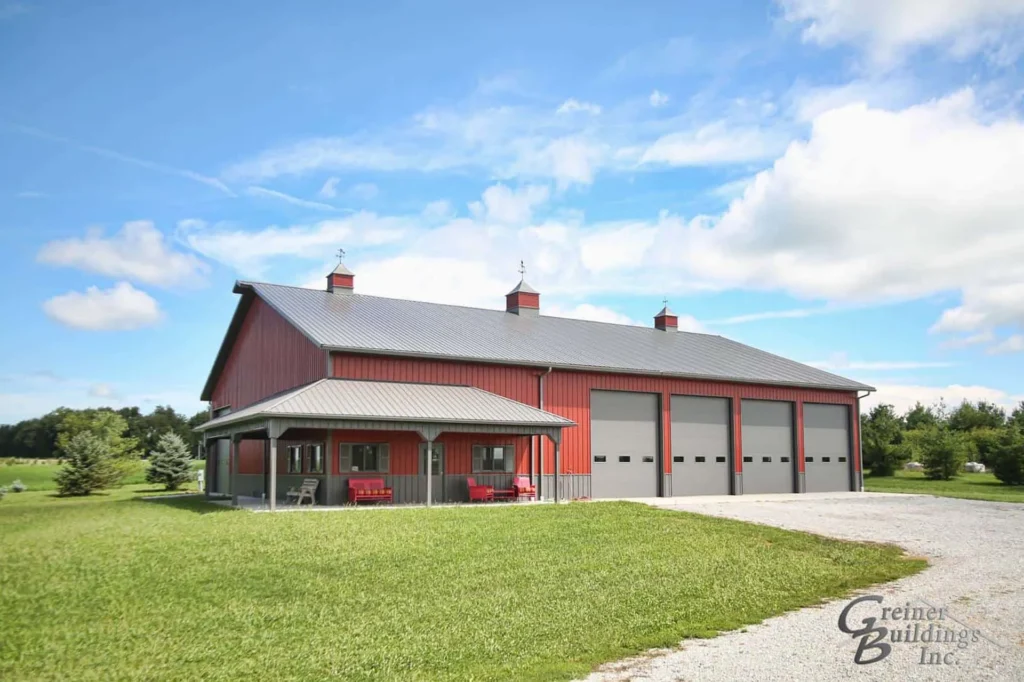
Overhead doors—also known as garage-style doors—are a popular choice for Farm Shops, SHOME® homes, and Workshops across Iowa and Illinois.
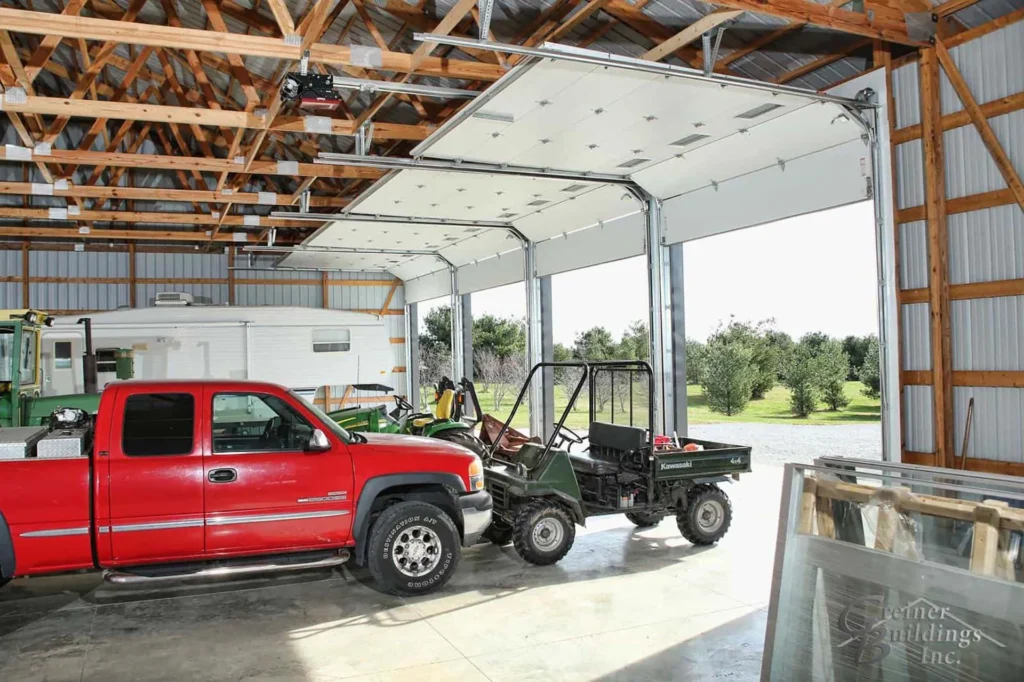
They operate like traditional garage doors with automatic openers, so you do not have to step outside to open them manually. This makes them especially convenient for Hobby Garages and Farm Shops.
Overhead doors also provide strong sealing and insulation, helping protect tools, vehicles, and equipment in Machine Sheds and Commercial Shops.
Colors, textures, windows, and hardware can be customized to complement residential SHOME® homes and Agricultural Buildings.
Advantages
- Remote or automatic operation for facilities used every day.
- Strong insulation and weather resistance for Midwest climates.
- Customizable windows, colors, and hardware for added curb appeal.
- Tight sealing helps keep moisture, dirt, and pests out of Workshops and Garages.
Considerations
- Typically limited to openings around 24 to 32 feet wide.
- Require approximately 2 feet of interior headroom, so they should be planned early in new construction and remodeling projects.
With their convenience and customization options, overhead doors work especially well for SHOME® homes, Hobby Garages and Workshops, and agricultural buildings.
The Powerhouse: Hydraulic Doors for Pole Barns
Hydraulic doors are engineered for strength and designed to handle massive openings and oversized machinery. With options up to 60 feet wide, they are often the best—or only—solution for doorways of this size.
Hydraulic doors provide insulation and weather resistance comparable to overhead doors, helping maintain a climate-controlled building and protect its contents year-round.
Because hydraulic doors open outward, they preserve interior space and allow you to use the full height of the building without increasing the structure’s height simply to accommodate the door system.
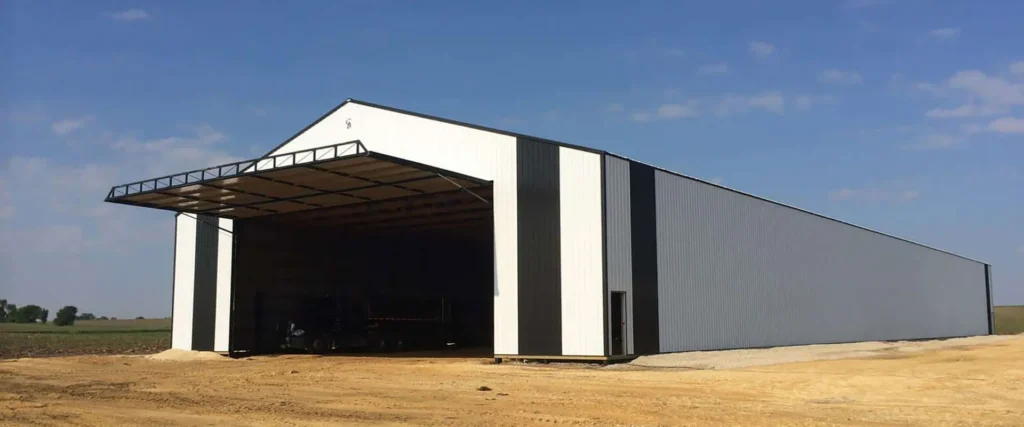
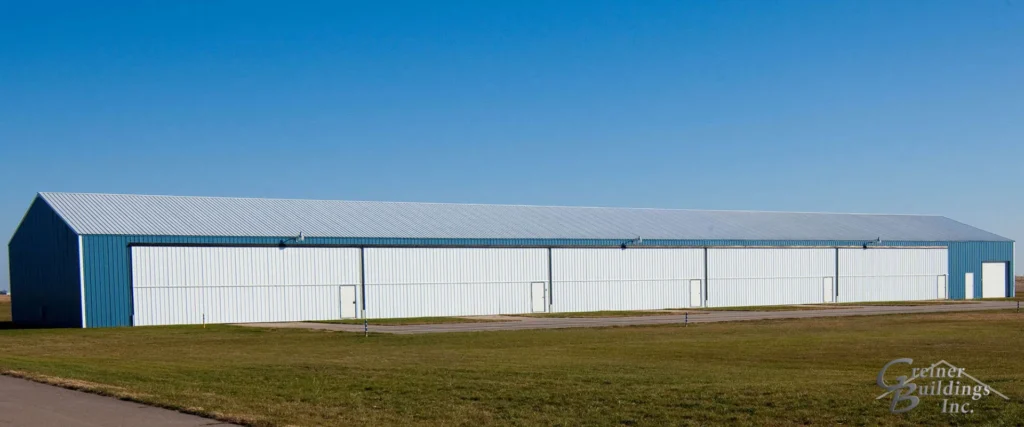
Advantages
- Accommodate massive openings up to 60 feet wide for oversized machinery.
- Outward operation preserves interior floor and ceiling space.
- Provide strong temperature control and full weather sealing for year-round protection.
- Ideal for aircraft, combines, and tall agricultural equipment.
Considerations
- Higher upfront cost due to the hydraulic operating system.
- Require adequate exterior clearance, which should be considered during site planning.
Large-scale farming operations and commercial businesses most commonly benefit from hydraulic doors. They are especially well suited for Aircraft Hangars and Agricultural Shops.