
Choosing the right exterior colors for your post-frame building is one of the most important and exciting decisions you’ll make during the construction process.
After all, it’s the first thing people notice when they drive up to your property.
Some owners want their building to blend naturally into the surrounding landscape, while others want it to stand out as a bold centerpiece. Either way, thoughtful color choices play a major role in the final result.
In this guide, we’ll walk through practical tips to help you create a color palette that works for your property, your purpose, and your long-term vision.
Greiner Buildings has been designing and constructing post-frame buildings for customers in Iowa and Illinois for over 35 years. With more than 2,000 projects completed, we’ve helped customers choose exterior color combinations for everything from agricultural barns and machine sheds to hobby shops, commercial buildings, and Shome® homes.
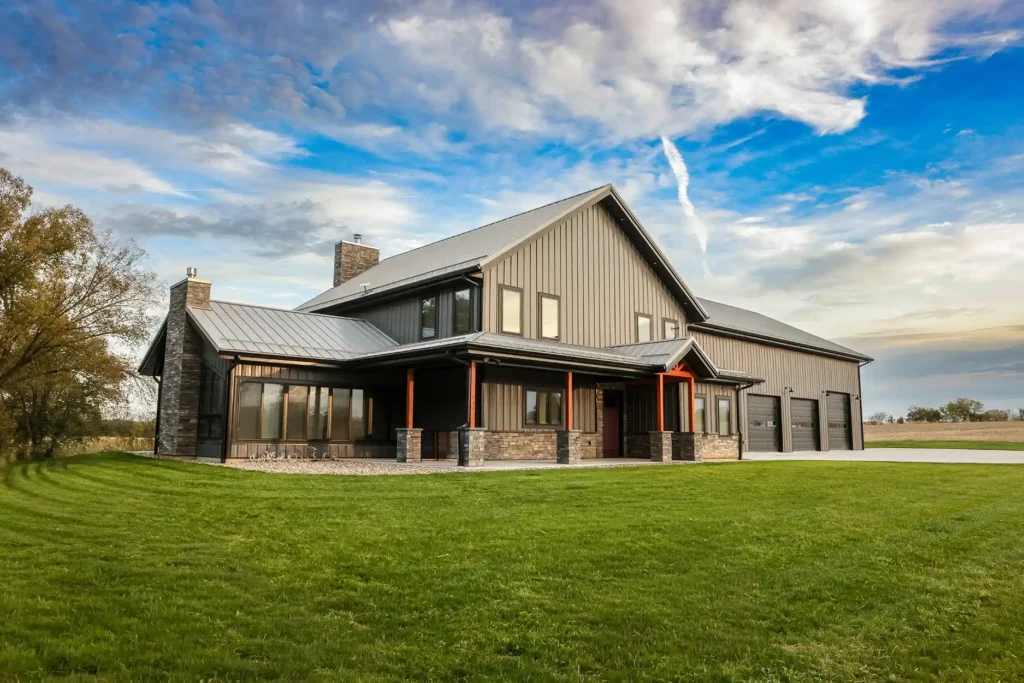
7 Tips for Choosing the Best Pole Barn and Post-Frame Building Colors
Here are a few key reminders to point you in the right direction when picking your colors and help you avoid any expensive regrets five years from now.
1. Coordinate With Nearby Buildings. When selecting colors for your pole barn or post-frame building, it’s important to consider nearby structures such as homes, Shome®, garages, barns, or other farm buildings. Coordinating exterior colors can create a balanced and cohesive look across your property.
2. Think About the Natural Environment. Even if there are no nearby buildings, you still need to consider the surrounding landscape. Are there evergreen trees or crop fields nearby? Do you prefer your post-frame building to blend in or stand out?
3. Learn About Color Restrictions Before finalizing your exterior colors, check for any local color or design restrictions that may apply in your area. While these rules are less common today, some municipalities, counties, or homeowner associations may have guidelines for building appearance. A quick conversation with your local building inspector or zoning office can help ensure your project meets any requirements before construction begins.
4. Consider the Purpose of Your Building Before choosing exterior colors, take a step back and think about the purpose of your building. Is it an agricultural barn, a machine shed, a hobby shop, a barndominium, or a commercial building?
The function of the structure often influences the style and color choices.
For example, a working farm building may lean toward traditional, practical color combinations, while a barndominium, Shome®, or hobby shop may allow for more modern or personalized design choices.
5. Don’t Forget About Accent Colors Your roof and walls make up most of the exterior steel on your building. Contrasting or coordinating colors for trim, door panels, soffit, and wainscoting can create a combination you love.
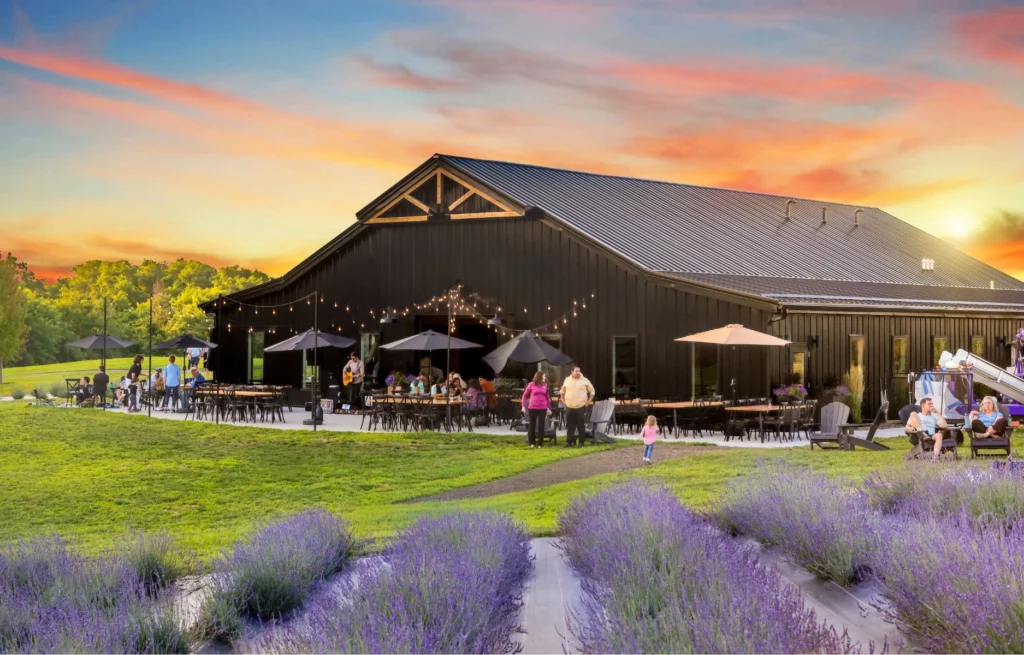
6. Choose high-quality metal and paint. You should choose your pole barn metal and paint carefully so that it stands up well against the elements for years to come. Remember that the only thing between you/your interior and mother nature is often the metal panel. The paint is the first layer of protection that comes in direct contact with the elements 24/365. Greiner Buildings uses a variety of metal manufacturers depending on client perspectives including J MAC Metals, Central States, and McElroy Metals.
Our preference is to use a 26 gauge panel w/ G90+ galvanization and most importantly 70% PVDF resin-based paint. The heavy panel adds strength while the G-90 galvanization avoids edge-rusting. Since this article is about paint we’ll hone in on that topic further. PVDF resin based paints such as Kynar, Hylar, or Trinar (which are competing brands), are known for their superior capability to retain color – reducing fading and chalking over time. By far, PVDF’s counterpart SMP (siliconized modified polyester) paints are most common because they are cheaper. But they fade quicker and all that work you did to choose beautiful colors will quickly disappear as fading is very unattractive.
Take it from the experts at GB – use PVDF, it’s worth every penny!
Greiner Buildings also offers a 10 year edge rust warranty to help protect against premature edge corrosion.
Regarding warranties, most warranties in the industry are quite similar but be sure to understand what the metal manufacturer warranty actually covers. You’ll want to choose a reputable manufacture to protect you from defects such as chipping, cracking, etc.
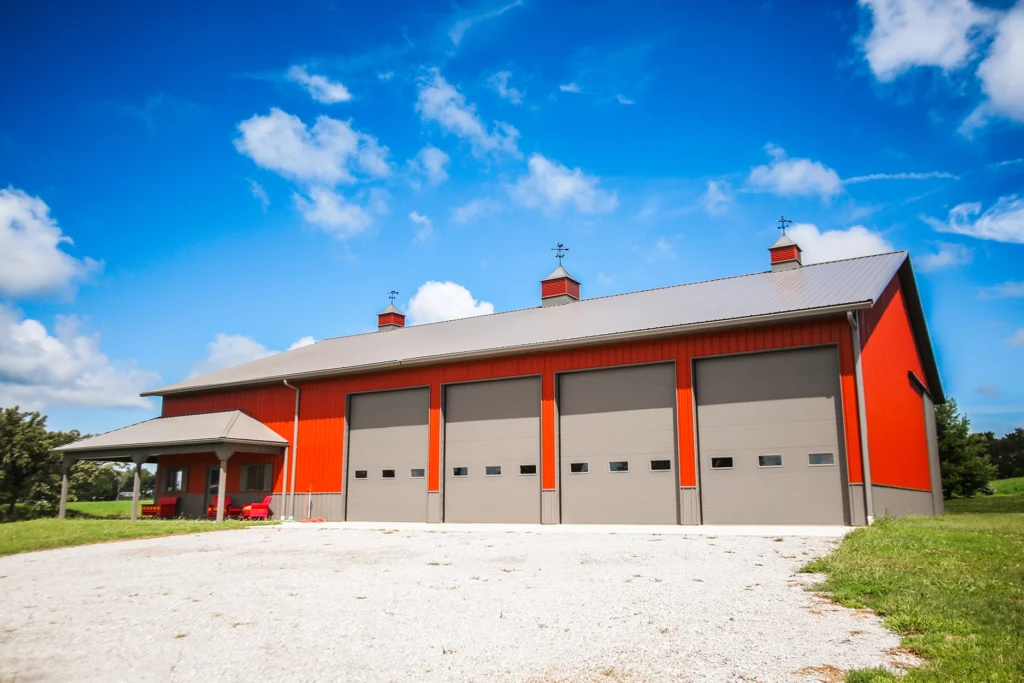
7. Consider your energy efficiency needs. Color choice can also influence energy efficiency. Certain metal colors and coatings are designed to reflect sunlight and reduce heat absorption, which may help regulate interior temperatures. This can be especially helpful for buildings used as shops, storage spaces, or living areas.
If energy efficiency is a priority, ask us about reflective color options and coatings that can help improve thermal performance while still achieving the look you want.
How Many Colors Should You Choose for a Pole Barn or Post-Frame Building?
There is a wide variety of color schemes available for pole barns, but the most common are two-tone and three-tone combinations. Most buildings use one color for the sidewalls and another for the roof, with a third color used for trim. Often, the wainscot, windows, doors, and trim are coordinated with the roof color.
Start by thinking about your pole barn or post-frame building colors in three main categories:
- Metal wall siding color
- Metal roof color
- Trim color
However, if you prefer a single-color scheme where all building components are the same color, that’s an option as well.
There are also opportunities to incorporate four-color designs. Pole barn features such as overhead doors, walk-in doors, window trim, cupolas, and mansards now come in a wide range of colors, allowing you to add additional character and detail to your building. These features can take your building’s design to the next level visually. The choices are limited only by your imagination.
Regardless of how many colors you choose, remember that the goal is to make your building stand out against the landscape. Try to avoid matching the roof and sidewalls exactly. A little variation can go a long way.
Popular Pole Barn and Post-Frame Building Color Trends
Exterior color trends for pole barns and post-frame buildings continue to evolve. While personal preference always plays a role, certain color combinations stand out for their timeless look and versatility.
Some of the most common pole barn and post-frame building colors include:
• White
• Charcoal gray
• Smoke gray
• Burnished slate
• Beige and off-white tones
• Matte black
• Red
• Hunter green
• Brown
• Copper or bronze tones
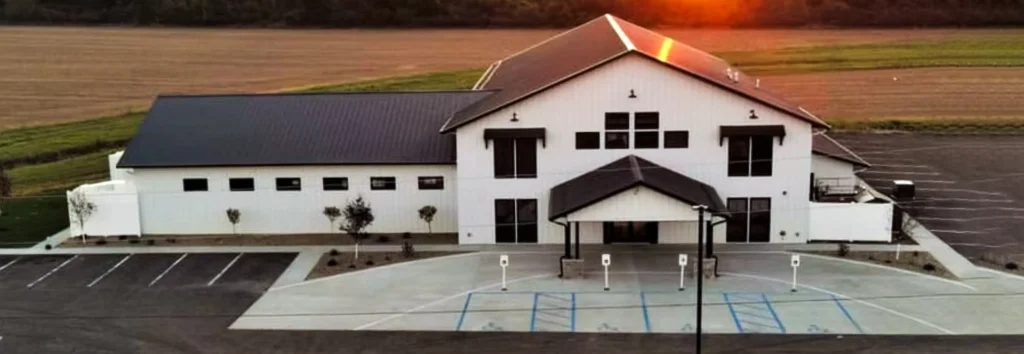
The Modern Farmhouse Look: One of the most noticeable shifts in recent years has been the move from traditional red barns to modern white and black color combinations.
A black and white palette offers a clean, timeless look that works well for hobby shops, garages, barndominiums, and Shome® homes. White siding paired with black trim or window frames creates a modern appearance while still feeling warm and inviting.
Many owners also choose a matte black metal roof to complete the look.
Typical combinations include:
• White or off-white siding
• Matte black roof
• Black trim
• Natural wood accents
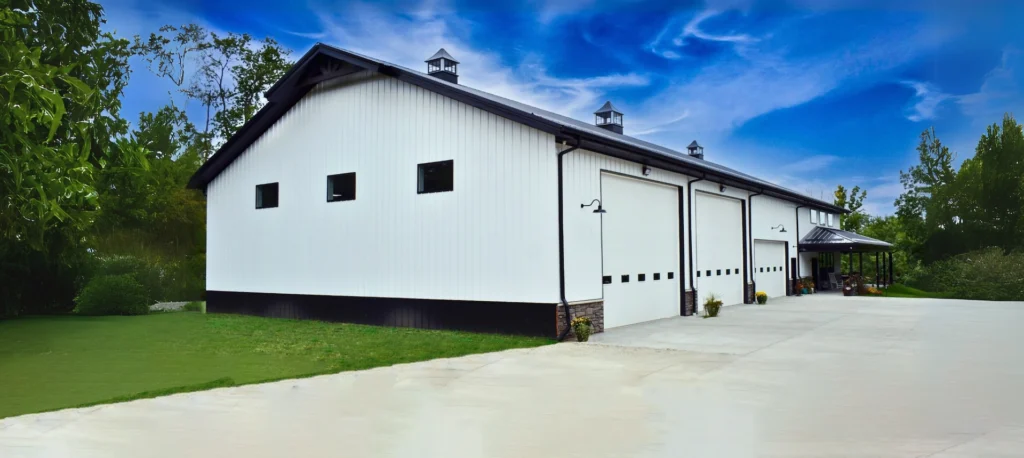
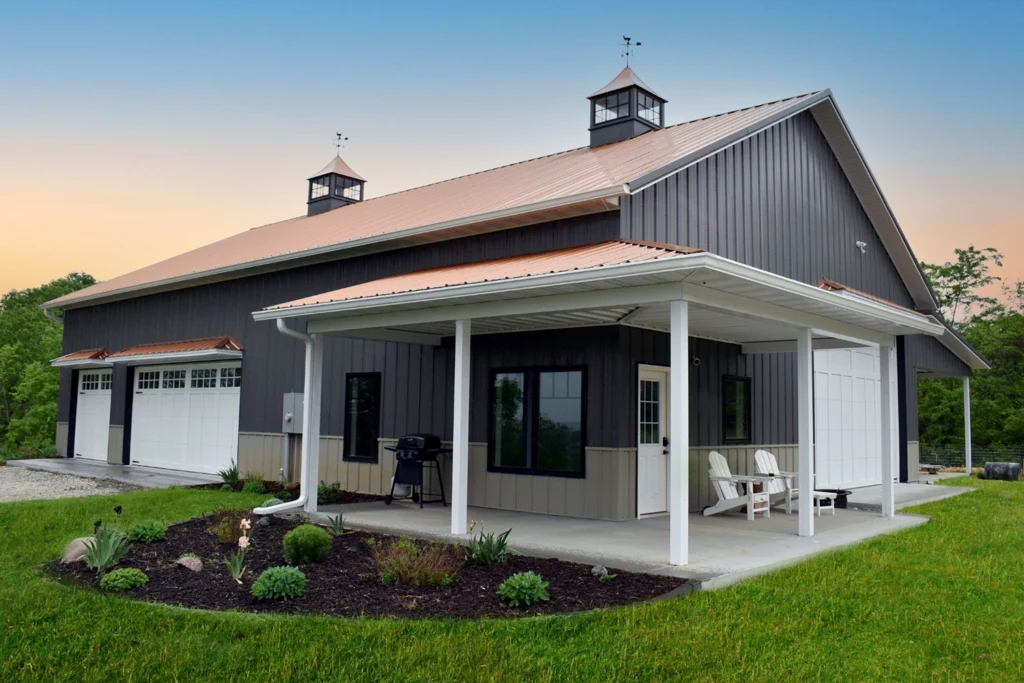
Dark Modern Buildings: Another growing trend is darker exterior palettes.
Common combinations include:
• Charcoal gray siding
• Matte black roof
• Black trim
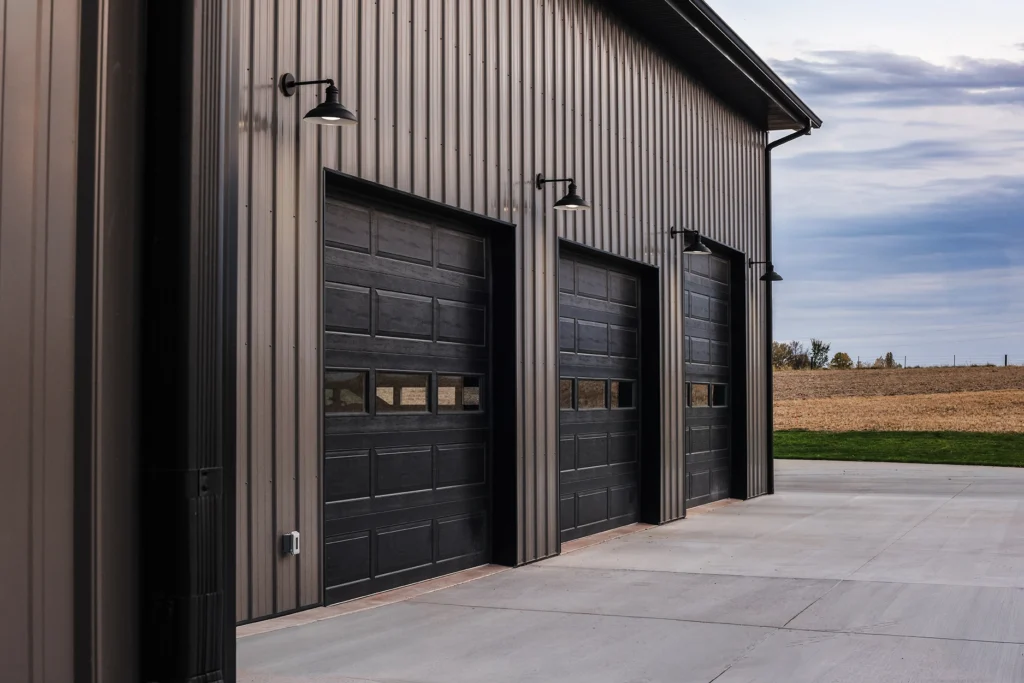
• Dark bronze doors
Some buildings even use monochromatic designs where the entire structure is charcoal or black.
These darker palettes create a bold, modern appearance and tend to hide dirt and wear well.
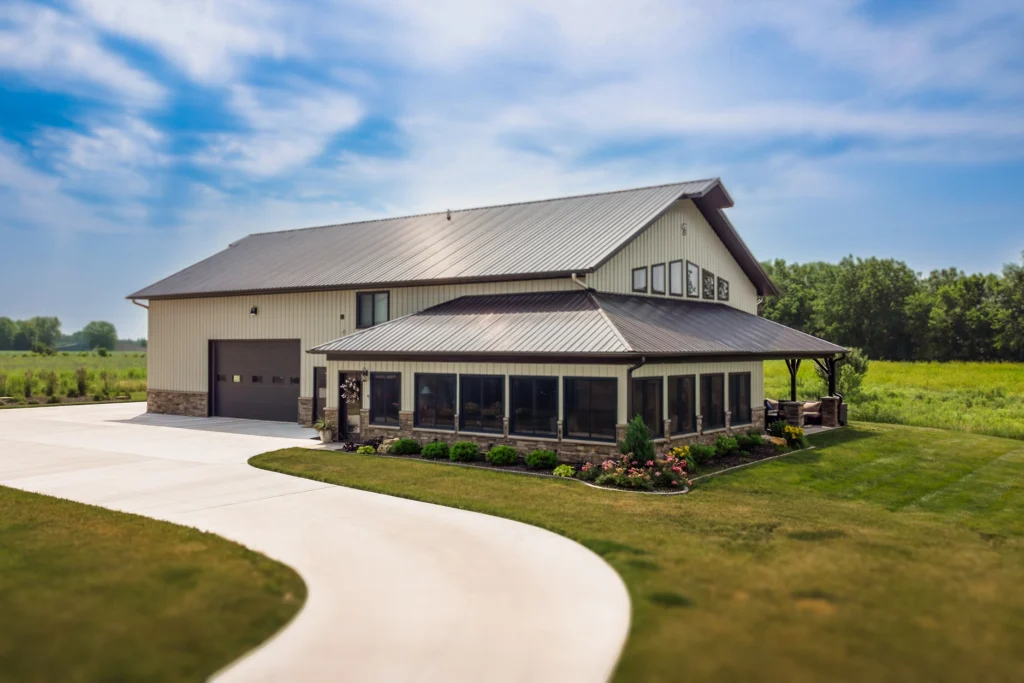
Earth Tone Buildings: Earth-tone palettes remain extremely popular for agricultural buildings and rural properties.
Typical colors include:
• Burnished slate
• Brown
• Clay or tan
• Bronze
• Dark green
These colors blend naturally into farmland and rural landscapes while reducing visual contrast on large buildings.
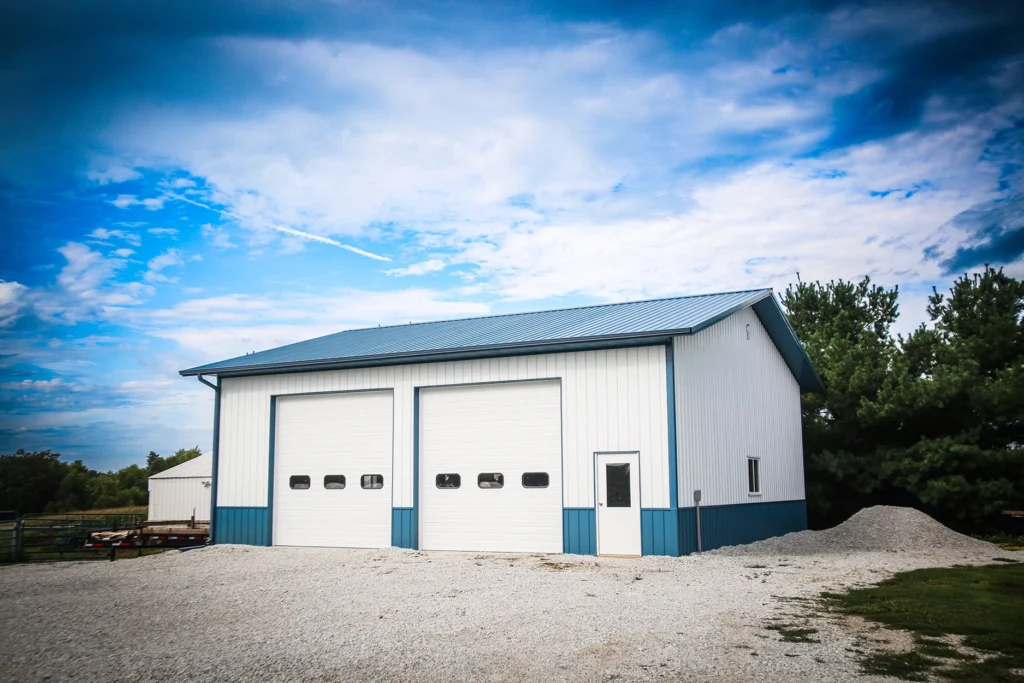
Two-Tone Wainscot Designs: Two-tone designs featuring contrasting wainscot panels are also very common.
Examples include:
• Light siding with dark wainscot and roof
• Dark siding with lighter wainscot and matching trim
Wainscot designs help break up large wall surfaces while hiding dirt and wear near ground level.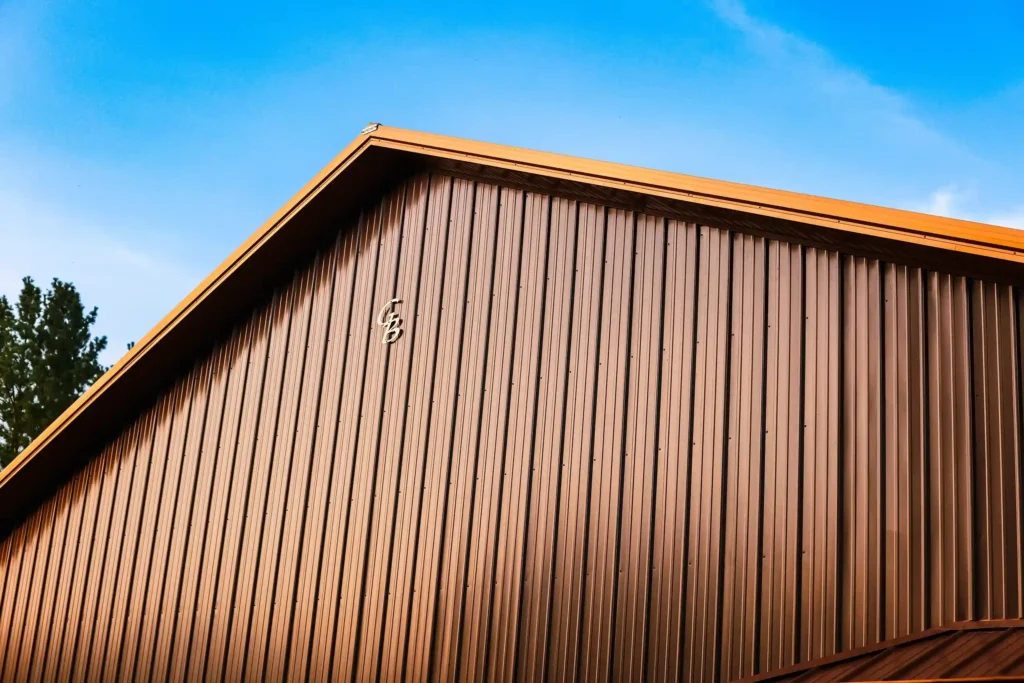
Warm Metal Tones: Warmer metal tones are becoming more popular on modern barndominiums and high-end shops.
Examples include:
• Copper tones
• Dark bronze
• Weathered wood finishes
• Rust or corten-style metals
These are often paired with charcoal roofs, black trim, and natural wood accents.
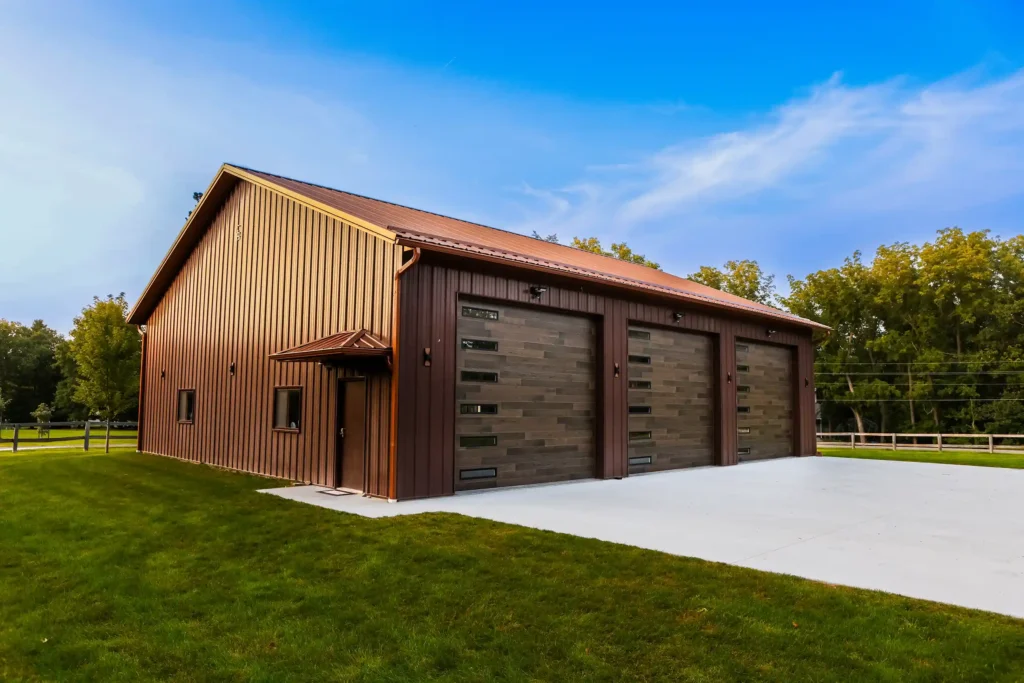
Monochromatic Buildings: Some property owners prefer monochromatic designs where the entire building uses one primary color.
Examples include buildings that are entirely:
• Charcoal
• Black
• White
This creates a clean, modern architectural look.
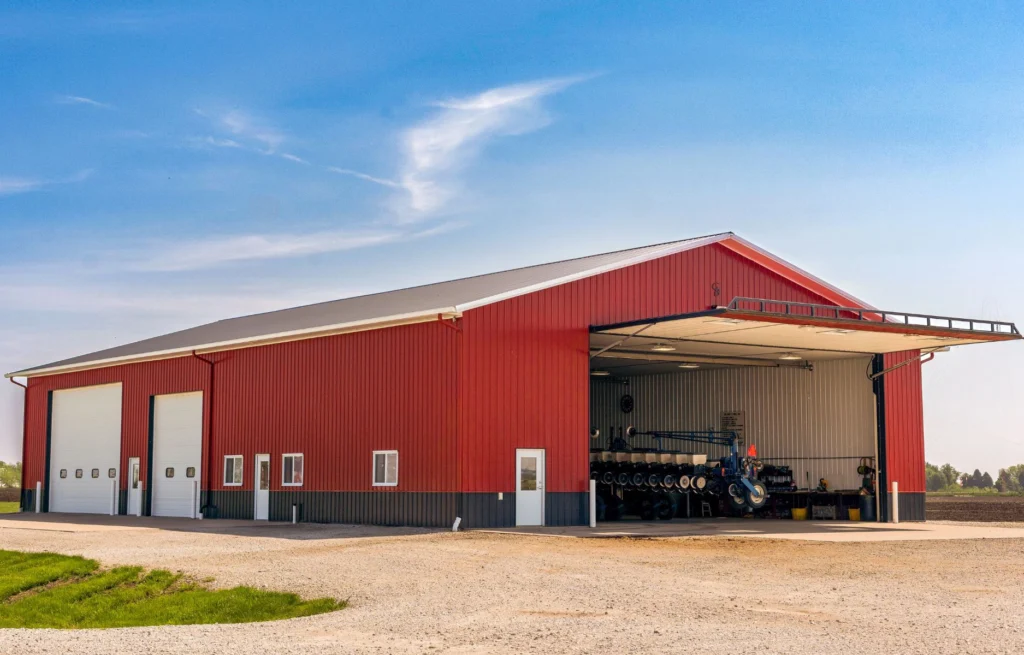
Traditional Barn Colors: Traditional barn colors are still widely used, especially for agricultural buildings.
Examples include:
• Red with white trim
• Green with white trim
• Brown with tan trim
These classic combinations remain timeless for working farm properties.
What colors look best together?
Your color preference options are nearly endless, especially when you look at combining them in a 2-tone or 3-tone design.
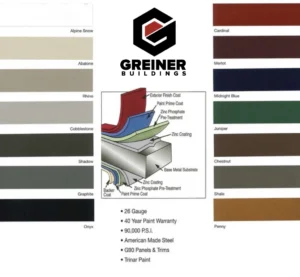
But, choosing your dream building design shouldn’t feel like going to the dentist. Greiner works directly with J MAC Metals for our metal siding design options. So to keep things simple and styling, they’ve created 14 signature colors for our customers.
Here’s our Quad Panel Metal color chart (click to download the PDF):
We recommend you speak with a proven post-frame contractor and work through their color charts together. A pole barn color visualizer can help, but nothing beats working with an expert.
Here are some color combinations we recommend to customers:
- White walls: Matte Black, Charcoal Gray, Ash Gray, Evergreen, Brown, or Red.
- Clay walls: Dark Brown, Red, or Evergreen.
- Gray walls: Gray, Midnight blue, or Evergreen.
- Red walls: Alpine Snow White, Sandstone, Bone White, Quaker Gray, or Antique Brown.
Or, you can always go a unique route and stand out among the rest:
- Clay (Abalone) walls: Light Stone, or Midnight blue.
- Terratone Brown (Shale) walls: Charcoal Gray, or Black.
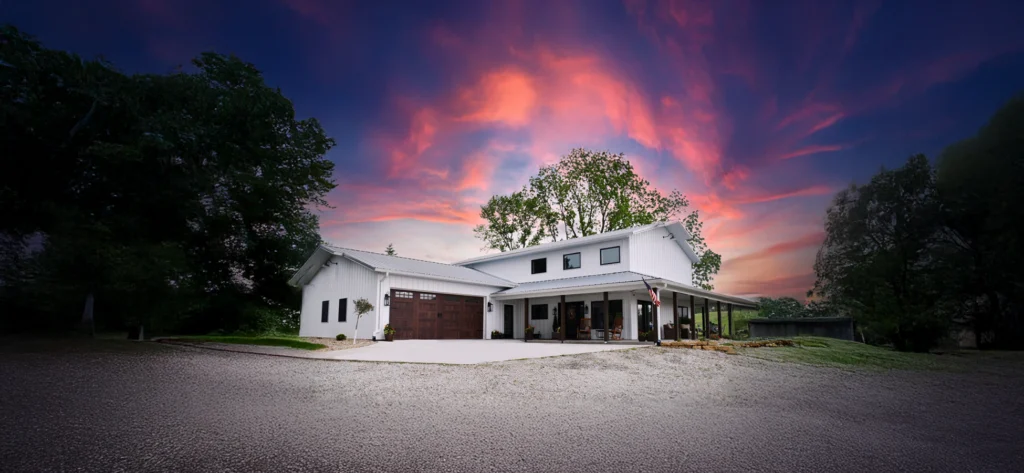
Here’s a 3-tone design we built that utilized a wood-grain color on the garage door:
Try Our 3D Building Designer
One of the easiest ways to experiment with building colors is to use our online 3D building designer.
This tool allows you to explore different building layouts, styles, and color combinations to help visualize your project.
While the colors shown in the 3D builder may not be exact matches to real metal panels, it’s a great way to explore ideas and get a feel for what combinations you like before making final decisions.
Where can I find color inspiration?
Ok, here’s the fun part!
Do a little research to discover what colors you gravitate toward. Take pictures of buildings in your area and think over what you love about them.
Actual color samples – Nothing beats ordering a basic sample of metal roofing or siding to match up directly with your trim materials, driveway, or porch posts. You can get samples in various sizes, shapes, and prices. And, they’re perfect for testing out different paint shades on-site.
Recent Greiner projects – Many of our clients find ideas on our website by viewing our gallery of recent building projects. It contains hundreds of examples of Shome®, agricultural barns, and commercial buildings. And, many customers have commented on how much our gallery helped inspire their final color choices.
Pinterest – There are millions of images on Pinterest, including color palettes that might work well in your home.
Instagram – Post-frame buildings and the barndo life are trending across every social media platform. So, create a bookmark folder and share them with your contractor.
Which Pole Barn Colors Will You Choose?
If you’re considering building a metal pole barn, shop, or Shome®, Greiner Buildings can help guide you through the entire process — from initial design to final construction.
Our design team can create 2D and 3D CAD designs so you can visualize your building before construction begins and explore color combinations that match your vision.
A Shome® combines the durability of a pole barn with the comfort of a modern home — making it one of the most versatile building styles in the Midwest.
When you’re ready to start planning your project, our team is here to help.
Frequently Asked Questions About Pole Barn Colors
What are the most popular pole barn colors?
Some of the most common pole barn and post-frame building colors include white, charcoal gray, burnished slate, beige, matte black, red, hunter green, brown, and copper or bronze tones.
How many colors should a pole barn have?
Most pole barns use two or three coordinated colors — typically one for siding, one for the roof, and one for trim.
What roof color works best for a pole barn?
Dark roof colors such as charcoal gray, black, burnished slate, and bronze are common choices because they pair well with many siding colors and hide dirt well.
Can I preview pole barn colors before building?
Yes. Many builders offer color charts, renderings, or online design tools to help visualize color combinations. Greiner Buildings also offers a 3D building designer that lets you explore layouts and color ideas before construction begins.